Arts
According to the old Greek philosophers, Art is a way of expressing our love and imagination for all the visible and non-visible things in the world. Picasso often aid
“Every child is an artist. The problem is how to remain an artist once he grows up”
Have you ever seen a kid dipping his both hands in the paint and then making some zigzag or random designs comprising of different colors on anything that is right before them? They will try to paint anything in sight and try to colorize every dull substance to make it more vibrant and visually desirable. While doing so you can just see the concentration on those beautiful faces and the happiness of the art explored. If you happen to have witnessed this phenomenon then you have seen creative art in progress.
Many of us naturally know that the art is a much important factor in a child early mental and personality development stage as we have seen the interest of our children in the arts and colors already.
It is proven on a factual basis too that art helps to develop the various positive personality traits in the children while making them more communicative, reasonable, and open-minded at the same time. Art provides the tools that help young adults to interact better with the environment that surrounds them and that doesn’t only help them on an intellectual basis, it also polishes a child’s personality according to the norms, ethics, rules, and social obligations of the community.
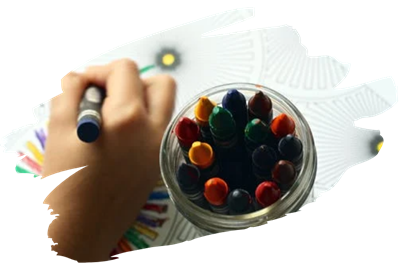
Life skills are the byproducts of art!
It may sound weird but it is actually interestingly true. It may seem fun and enjoyable to learn the art (although it is) but while doing such creative activity, children learn many life skills alongside the basic artistic ventures. So encouraging young adults and children to be more creative will not be a bad investment.
Children like to communicate but sometimes we as adults can not exactly understand what they try to express. Artistic activities provide a channel to the children by whom they express themselves not with the verbal language but by colors, visuals, and stories. They may draw a loved one passing by or an animal climbing the tree with a mixture of color combinations of characters but they will always communicate their feelings through these artworks. Their emotions can be more observable and hence their communication skills through art are further nourished.
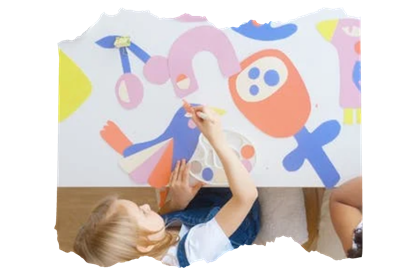
Problem-solving is a skill that has always been in demand and the ones who develop and further nurture this ability are most probably going to be successful in their respective field. While talking of analytical and problem-solving abilities, art has so much potential in this regard to offer children diverse scenarios through which they can enhance their capabilities. When a child colors something he thinks about whether he should paint it brown or orange or how to make this head red? Even if he does not have that color, he tries to mix other colors to formulate his desired color. Sometimes he tries to find a different way to hold a string in his artwork. He tries to explore multiple options and learns that he can do this in many different ways. Just like a scientist, who tries and experiments on new things and invents wonders. By exploring solutions to a single art-related problem, a child unconsciously develops the strategies to solve a complex situation and ultimately enhances his problem-solving skills.
Art Makes children emotionally stronger!
While children express themselves through their artworks, they become emotionally stronger when they develop something new and get appreciated by others. Art installs the feelings of self-accomplishment and self-belief in the child’s personality by which they develop a factor of uniqueness which ultimately helps them to stand out from the crowd.
Children also learn control of different types of materials and fine motor skills.
LTV strives to boost the creativity of the children through artistic programs and activities to further polish their talents. We believe that art is a process, not a product and we can only inculcate the artistic soul in the children by a constant effort at various stages of their lives experimenting, exploring, and discovering their natural instincts.